
How to Specify a Cropped Zip Knit Cardigan for a B2B Collection
IN THIS ARTICLE
· Start with the intended silhouette
· Define the knit fabric rather than relying on a style name
· Engineer the front zipper with the knit structure
· Build a size and color approval matrix
· Use samples to verify fit, appearance and workmanship
· Plan care information around tested performance
· A practical inquiry checklist for buyers
How to Specify a Cropped Zip Knit Cardigan for a B2B Collection
A Cropped Zip Knit Cardigan is easiest to source successfully when the buyer defines the silhouette, fit, yarn behavior, zipper construction and sample tolerances before bulk production. The product name alone does not settle those details. SUXING’s public knitwear catalog identifies a Cropped Zip Cardigan as style JM53055 and lists Burgundy / M-L; the page does not publish fiber composition, garment measurements, zipper material, or a tolerance table. Those missing fields should be confirmed in the tech pack rather than assumed. This guide turns that catalog reference into a practical B2B development brief and separates listed product facts from buyer decisions.
Public product reference and sourcing fields to confirm
Item | Publicly listed information | Buyer action |
Style reference | JM53055 | Use this code in inquiries and sample records. |
Catalog name | Cropped Zip Cardigan | Confirm the exact design revision before development. |
Listed color / size | Burgundy / M-L | Clarify size meaning and availability; request the full size chart. |
Fiber / gauge / zipper | Not stated on the product listing | Confirm from approved BOM and technical specification. |
Care label reference | ISO 3758:2023, Edition 4 (published 2023-12) | Use only as a symbol framework; validate care on finished garment. |
Start with the intended silhouette
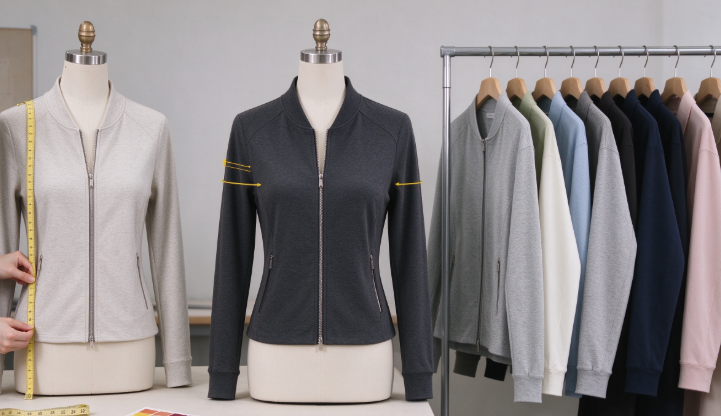
“Cropped” needs a measurable reference. Buyers should specify body length from high-point shoulder to hem, chest width, shoulder position, sleeve length and hem circumference for each sample size. A short body can read as modern and intentional when paired with a high-rise bottom, but a length that is too short may reduce layering comfort or shift the visual proportion across different torso lengths. State the intended wearing position and fit—close, regular or relaxed—using front and side reference images or a garment the team has approved.
The SUXING catalog provides a useful starting point but not a full measurement spec: the listed color is Burgundy and the displayed size grouping is M-L. The product page also shows other knit styles and a broader knitwear collection. Treat those as evidence of catalog scope, not proof that the cardigan is available in every color, size, yarn or customization option. Request a current availability and development confirmation for the exact style before committing to a range plan.
Define the knit fabric rather than relying on a style name
Knit gauge, stitch structure, yarn composition and finishing affect weight, drape, recovery and surface appearance. Ask the supplier to identify the proposed fiber percentages and yarn count, then approve a physical swatch before a full garment sample. If the design uses rib at the cuffs or hem, describe the desired rib width and recovery; if the body uses a plain or textured stitch, identify it in the artwork or tech pack. A clear description makes the sample review objective and helps prevent visual substitutions between development and production.
For a cropped cardigan, fabric behavior at the hem is particularly important. A compact rib may hold the cropped outline, while a looser edge can relax after wear or care. Neither is universally better: the choice depends on the styling intent and the tested garment. Ask for the complete fabric and trim bill of materials, including zipper tape, slider, puller, labels and sewing thread. The product listing does not disclose these details, so they belong in the buyer-supplier approval record.
Engineer the front zipper with the knit structure
A zipper introduces a relatively stable component into a flexible garment. The front opening can wave if the knit edge stretches during sewing or if the zipper tape and garment panels behave differently. During sampling, review zipper length, tape color, tooth or coil appearance, slider movement, top and bottom stops, and the finish where the zipper meets the collar and hem. Specify whether the garment should open fully, whether a guard or placket is required, and whether the puller needs a particular shape or finish.
Ask the sample room to show the zipper fully closed and partly open on a dressed form, then inspect both sides for puckering and twisting. Include the intended opening direction and any brand-specific puller artwork in the tech pack. A buyer should not infer a zipper type, strength rating or water resistance from the words “zip cardigan.” If performance claims such as cycle durability are needed, define a test method and acceptance threshold with the supplier before production; do not add an unsupported claim to marketing copy.
Build a size and color approval matrix
A buyer preparing a line sheet should record the approved base size, graded size range, color standard, sample status and required fit comments in one matrix. The current product page lists “Burgundy / M-L” for JM53055, but does not explain whether M-L means a combined size, a range, or a display label. Confirm the supplier’s interpretation in writing and request a measurement chart for every sellable size. For additional colors, approve lab dips or yarn swatches under controlled lighting before bulk knitting.
Grading should preserve the design rather than merely add equal increments everywhere. Shoulder width, sleeve opening, body length and zipper length may need different grade rules. Review the smallest and largest sizes in the intended assortment because a cropped body and full-length zipper can change proportion visibly across the range. Keep the approved sample, measurement sheet and color standard together with a dated revision number; when any detail changes, identify which approval supersedes the previous one.
Use samples to verify fit, appearance and workmanship
A useful sample sequence separates questions. A first prototype can check construction and proportion; a revised fit sample can address measurements and wearing comfort; a pre-production sample can confirm the approved materials, color and trims. The precise sample stages depend on the supplier’s process and the order. Record comments as measurable actions—for example, “increase back length by 1 cm at size M”—rather than subjective notes such as “make it slightly longer.” Do not treat a development sample as evidence that every bulk unit will match without production inspection.
Plan care information around tested performance
Care instructions should reflect the finished garment, not an assumption based on one fiber or one yarn swatch. Zipper components, dyes, interlinings, finishing and stitch structure can all affect the care route. ISO 3758:2023 establishes a system of care-label symbols intended to communicate treatments that should not cause irreversible damage to textile articles. It is a labeling framework, not a test report for this particular cardigan. Before printing labels, confirm the applicable market rules and verify the proposed care instructions on representative finished garments.
A practical inquiry checklist for buyers
When requesting a quote for a private label cropped zip cardigan, send the reference style code JM53055, target market, intended fit, planned size range, desired colors, estimated order quantity and required delivery window. Attach a measurement chart, stitch references, zipper detail, label artwork and packaging instructions where available. Ask which specifications are currently standard and which require custom development. Since public catalog pages do not publish minimum order quantities, lead times or price, get those commercial values in a written quotation rather than using generic industry estimates.
Frequently Asked Questions
What does the SUXING page confirm about style JM53055?
It identifies the style as Cropped Zip Cardigan and displays Burgundy / M-L. It does not publicly specify fiber content, measurements or zipper construction.
Can the garment be ordered in other colors or sizes?
The product page does not confirm that. Ask SUXING to verify available colors, size interpretation, minimum order and any development requirements.
Does ISO 3758:2023 certify a garment?
No. It standardizes care-label symbols. It does not certify this cardigan or establish that a particular care instruction is suitable without product validation.