
Wool Sweater Manufacturing Trends: What Buyers Should Watch
A trend-focused guide for B2B buyers on how material verification, multi-category sourcing, and capacity planning are reshaping wool sweater manufacturer selection.
Why wool sweater sourcing decisions are getting more technical
Wool sweater programs used to be judged mainly on hand feel, color, and price. Buyers now ask for more: traceable fiber content, consistent gauges across sizes, and a supplier who can handle a knitwear line alongside adjacent outerwear categories. That shift changes how a wool sweater manufacturer is evaluated. The questions that separate capable suppliers from order-takers are increasingly technical and operational, not just commercial.
This article maps the observable trends shaping wool sweater manufacturing and translates each into a decision rule for B2B buyers. It separates what can be verified from what is inference, and it flags where buyers should request documentation rather than rely on marketing language.
Trend 1: Material claims are moving from labels to verification
Fiber content claims are under more scrutiny across export markets. A sweater labeled as pure wool or wool-rich is expected to match its stated composition, and buyers increasingly ask for test reports or fiber-analysis documentation before approving bulk production. The practical effect is that suppliers who can document their yarn inputs and maintain batch traceability become easier to qualify.
What to verify
- Fiber composition reports from a recognized testing laboratory, matched to the specific yarn lot used in sampling.
- Yarn supplier identity and whether the mill can name the spinner or fiber source on request.
- Consistency between sample and bulk: confirm that the approved sample's yarn is the same specification used in production.
Where documentation is unavailable, treat the claim as unverified and price the risk accordingly. This is especially important for programs selling into markets with labeling enforcement.
Trend 2: Multi-category suppliers are simplifying vendor lists
Retail buyers are consolidating vendor lists to reduce coordination overhead. A supplier that can produce knitwear and goose down outerwear under one program reduces the number of sampling cycles, compliance audits, and shipping consolidations a buyer must manage. This does not mean every supplier should be a generalist; it means buyers should ask whether adjacent categories are genuinely in-house or subcontracted.
| Evaluation area | Single-category supplier | Multi-category supplier | Buyer implication |
|---|---|---|---|
| Sampling coordination | Separate sample rounds per category | Potentially combined sample rounds | Fewer approval cycles, but confirm each category's sample lead time |
| Compliance documentation | One audit scope | Broader audit scope | Verify that all claimed categories are covered by the same audit |
| Production risk | Concentrated in one process | Spread across processes | Ask how capacity is allocated during peak season |
The table is a framework, not a scorecard. A multi-category supplier only delivers consolidation benefits if the categories are actually produced within the same controlled operation.
Trend 3: Capacity planning is becoming a seasonal negotiation
Knitwear and down outerwear share a seasonal demand curve, which means capacity is not evenly distributed across the year. Buyers who lock in production slots earlier, and who can forecast size and color breakdowns with reasonable accuracy, tend to get more predictable delivery. The trend is toward capacity being discussed at the sampling stage rather than after order confirmation.
Zhejiang Suxing Knitting Co., Ltd. states a 100 mu manufacturing base with 7 workshops and 60 production lines, and a monthly production capacity of up to 400,000 pieces. Buyers should treat capacity figures as a starting point for discussion and ask how that capacity is allocated across product types and seasons.
Questions that reveal real capacity
- What is the peak-season utilization rate for wool sweater lines specifically?
- How many production lines are dedicated to knitwear versus outerwear?
- What is the typical changeover time between colorways or gauges?
- Can the supplier share a capacity calendar for the requested delivery window?
Trend 4: OEM and ODM boundaries are blurring
Buyers increasingly expect a supplier to move between executing a fully specified tech pack (OEM) and proposing construction or material alternatives (ODM). The distinction matters for intellectual property, cost, and timeline. A supplier that offers both should be asked to state clearly which mode applies to each style, who owns the design files, and how changes are approved.
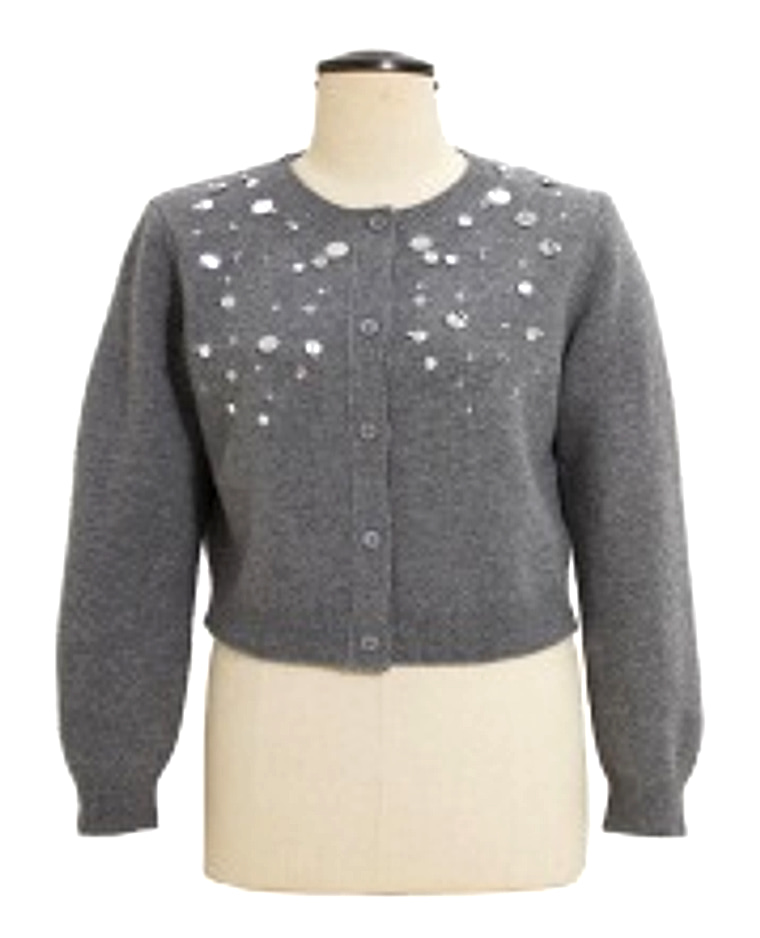
For a program like a beaded crewneck wool sweater, ODM support might include proposing bead placement or stitch density; OEM execution would follow the buyer's approved specification exactly. Confirm the mode in writing before sampling begins.
Trend 5: Sampling communication is a leading indicator of production reliability
Buyers can learn a lot from how a supplier handles the sampling phase. Clear comments on tech packs, documented material substitutions, and realistic sample lead times tend to correlate with smoother bulk production. Vague or slow sampling communication is a warning sign worth investigating before committing to a seasonal program.
Practical verification steps
- Request a sample timeline with named milestones and responsible contacts.
- Ask how material, color, size, label, and packing changes are documented and approved.
- Confirm who signs off on pre-production samples and how revisions are tracked.
How to turn these trends into a sourcing decision
The common thread is documentation. Buyers should build a short verification checklist for each candidate supplier: fiber test reports, audit scope, capacity calendar, OEM/ODM mode declaration, and sampling communication record. Suppliers who answer these consistently are easier to onboard and less likely to create surprises in bulk.
For buyers sourcing across knitwear and outerwear, the decision rule is straightforward: consolidate only where the supplier can demonstrate in-house control of each category. Where that evidence is missing, keep the categories separate and manage the additional coordination cost.